Cruel Fairy Tale and Abandoned Game
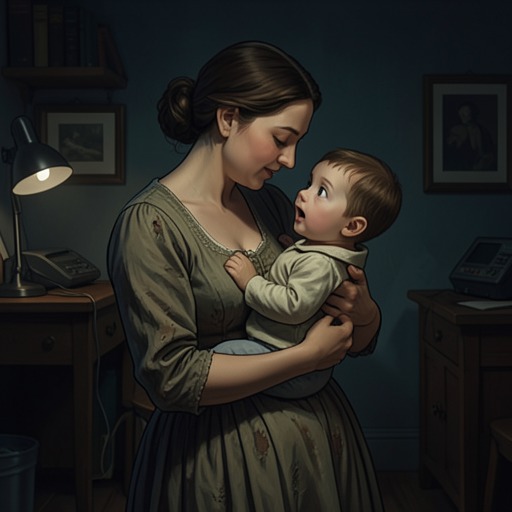
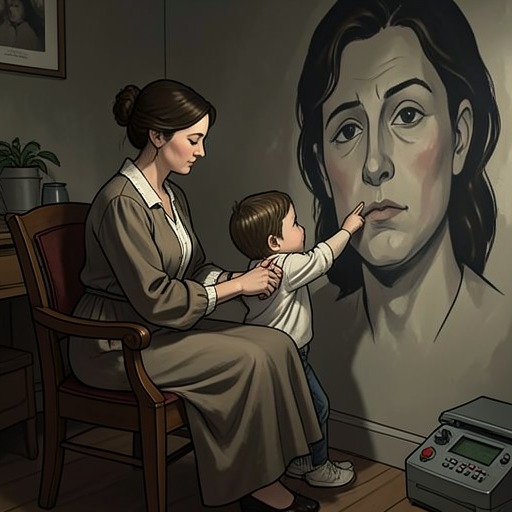
Chanson douceCruel Fairy Tales and the Abandonment Game names a pattern in Louise’s care of Mila and Adam: stories and games offer the children imaginative worlds, but repeatedly bring them to the edge of abandonment. Louise’s tales are full of lost or imprisoned children and endings shadowed by death; her favorite game, hide-and-seek without rules, makes her disappearance feel real. The children’s laughter at reunion follows fear rather than preventing it, so play becomes at once a form of intimacy and a means by which Louise governs their attention and distress.
The world of Louise’s stories
Louise gradually wins Mila over through stories told day after day. The same kinds of figures recur: orphans, lost little girls, imprisoned princesses, and castles abandoned by terrible ogres. Their landscapes are inhabited by strange, damaged or melancholy creatures, including birds with crooked beaks, one-legged bears, and melancholy unicorns. Mila listens closely and impatiently asks for the characters to return, making the stories a shared ritual rather than a passing distraction.
The tales seem to pour out of Louise without conscious effort or deliberate recollection. Yet their imaginative abundance is not reassuringly gentle. In these cruel stories, the good characters die at the end, though not before saving the world. The juxtaposition gives the tales a severe emotional logic: rescue may be achieved, but it does not guarantee survival. Their orphans, prisoners, and abandoned places also echo the fear of being left alone that will later become literal within Louise’s games.
Play as a carefully made world
Louise takes the games she invents with Mila seriously. In police-and-thief play, she may accept the role of prisoner behind imaginary bars or become the figure of order chasing Mila. She gives the game a precise geography for Mila to memorize, makes costumes, builds a plot full of reversals, and prepares the setting with meticulous care. Mila can sometimes lose patience with this elaborate preparation and urge Louise to begin. The contrast shows that play is not simply spontaneous amusement: Louise constructs its world and determines how it is to work.
Myriam sees another side of this commitment when she comes home to find Louise on the floor with her face painted in broad black strokes, wearing a crepe-paper headdress beside a crooked tipi made from a sheet, a broom, and a chair. Louise twists and cries out in the middle of the living room; Myriam is unsettled and initially thinks the nanny looks drunk. Louise explains that her legs are tingling, while Adam clings to her calf and she laughs, still absorbed in the imaginary world she has made with the children. The scene helps explain Myriam’s thought that Louise may herself be a child: the intensity that gives the games their vividness also makes them startling to an adult observer.
Hide-and-seek without rules
Unknown to Myriam, hide-and-seek is Louise’s favorite game. It has no counting and no rules; it begins with surprise. Louise vanishes without warning, hides where she can continue watching the children, and holds herself still beneath a bed or behind a door, even stopping her breath. The game reverses the ordinary arrangement of care: the children are left to search for the adult who usually watches over them, while Louise controls both her visibility and the moment of reunion.
Mila and Adam first greet the disappearance as a game. Mila screams and claps, Adam follows her, laughing so hard that he repeatedly falls on his bottom, and they call out to Louise. But Louise does not answer. Their calls turn into distress: Adam becomes overwhelmed, sobbing and calling her name, while Mila begins to believe that Louise has really left them alone in the apartment and will not return. She begs Louise to stop, insists that it is not funny, and grows angry. Hidden in the dark, Louise watches their panic and still does not come out. The episode makes the game’s emotional cost explicit: the children’s fear is not merely a side effect they immediately shake off, but the very condition Louise prolongs by withholding reassurance.
Discovery, reversal, and reunion
Mila learns to search more methodically, opening doors, lifting curtains, and looking beneath the bed. Louise remains difficult to find because her small frame lets her take refuge in new hiding places: the laundry basket, beneath Paul’s desk, the back of a cupboard under a blanket, or the dark shower cubicle. Even when Mila searches in vain and sobs, Louise stays still. The repetition gives the game a mounting pattern: the child becomes more skilled at finding the hiding places, but that knowledge does not make the search less frightening, and the nanny does not yield when Mila despairs.
One day Mila changes the rules by ceasing to cry. She circles Louise’s hiding place and pretends not to discover her, then sits on the wicker laundry basket. Louise feels she is suffocating inside it. Mila quietly proposes making peace, but Louise remains silent, knees drawn to her chin, while the child’s feet tap gently against the basket. Mila laughs and says that she knows Louise is there. Instead of emerging gently, Louise springs up so abruptly that Mila is thrown to the floor and strikes her head on the shower tiles.
The reversal is physical as well as emotional: the child who has spent the game searching is suddenly knocked down by the returning adult. Mila cries from the impact, but when she sees Louise standing over her in triumph, her terror turns into hysterical joy. Adam runs into the bathroom and joins the two girls in their giggling dance, which threatens to leave them breathless. The ending restores shared play, but it does not cancel the injury or the preceding fear. Reunion is exhilarating precisely because Louise has made her absence seem final.
Abandonment as a play pattern
The stories and hide-and-seek episodes are connected by more than their repeated images of lost children. In the tales, orphans and imprisoned princesses inhabit worlds where rescue has a cost; in the game, Mila and Adam experience a short-lived version of being left without the person they depend on. Louise’s storytelling draws Mila close through recurring characters, while her games make the children pursue her and wait for her to return. In both forms of play, Louise controls when the children encounter danger and when they are allowed relief.
The game also complicates the tenderness in Louise’s care. Mila returns to her after mischief seeking affection, and the children’s final delight shows the strength of their attachment; yet during hide-and-seek Louise watches their distress without answering. The same imaginative capacity that makes her an absorbing companion thus becomes a means of testing how long the children can bear her absence. Cruel fairy tale and abandonment game together reveal a troubling boundary between nurturing play and emotional control: the children are invited into a world Louise invents, but they cannot determine when its frightening part will end.